
Become a Search & Recovery Specialist
Certification Card
Required Equipment
Search and Recovery Procedures
Determining the Search Area
Selecting and Conducting Search Methods
Target Marking
Selecting and Performing Recovery Methods 1
Selecting and Performing Recovery Methods 2
Selecting and Performing Recovery Methods 3
Selecting and Performing Recovery Methods 4
Rope Work 1
Rope Work 2
Rope Work 3
Rope Work 4
Rope Work 5
|

|
■How to Use a Lift Bag
Estimate the weight of the recovery object and prepare an appropriately sized lift bag.
As a general guideline, approximately 1 liter of lift capacity is required per 1 kilogram of object weight.
After securely attaching the lift bag to the object using a nylon rope, gradually add air using your alternate air source.
When the lift bag begins to rise from the sea floor and the line becomes taut, check all knots and connections to ensure they are secure.
Carefully observe the moment the object begins to lift off the sea floor, and continue adding air gradually until the object achieves neutral buoyancy.
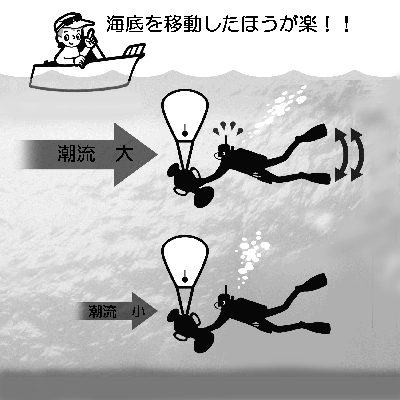
Because surface towing requires significant physical effort, once the object becomes neutrally buoyant, move it horizontally near the sea floor toward the ascent point whenever possible.
Upon reaching the ascent point, maintain a controlled ascent at the diver’s recommended safety ascent rate while accompanying the object.
|
|
|
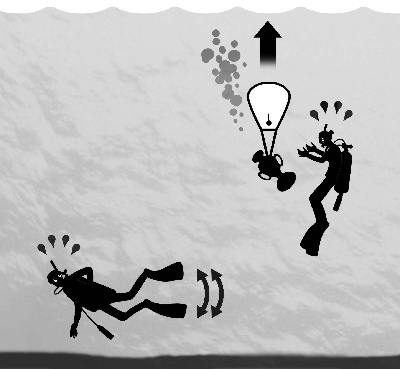
Adding too much air at once is dangerous, as the object may ascend rapidly and uncontrollably once it leaves the sea floor.
As the lift bag ascends, the air inside expands. Gradually release air using the exhaust valve to control the ascent speed.
If you are unable to vent the air and the object begins ascending faster than the diver’s safe ascent rate, do not attempt to chase the lift bag.
Instead, immediately move away from beneath the object to avoid injury in case it falls.
|
|
|


|
© net-diver school. 2006. All rights reserved.
|
|
