
All-season comfortable diving
Certification card
Dry suit features 1
Dry suit features 2
Dry suit features 3
Dry suit features 4
How to use dry suit 1
How to use dry suit 2
How to use dry suit 3
How to use dry suit 4
How to use dry suit 5
|

|
■ Material
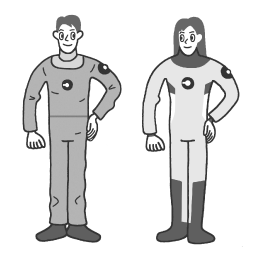
There are two main types of dry suits: neoprene and shell (fabric) types.
Neoprene dry suits are made from the same foam rubber material used in wetsuits.
Shell dry suits are made from waterproof fabric, typically nylon coated or laminated with rubber or other waterproof materials.
|
|
| |
■ Thermal Protection
When wearing a dry suit, little to no water enters between the suit and your body.
The layer of air inside the suit provides effective insulation and helps reduce heat loss compared to a wetsuit.
Neoprene dry suits provide insulation from the material itself.
Shell dry suits do not provide significant insulation on their own.
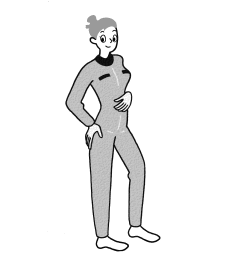
Thermal protection is adjusted by selecting an appropriate undergarment (inner suit).
|
Undergarment (Inner Suit)
|
| |
■ Waterproof Seals
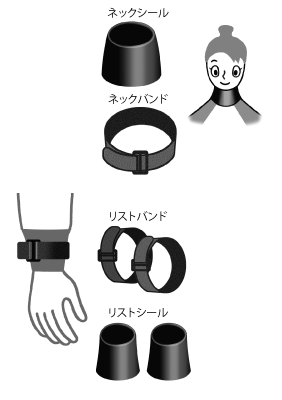
A dry suit seals at the neck and wrists to minimize water entry.
However, small amounts of water may enter if the seals are disturbed by movement or trapped hair.
To improve sealing, neck and wrist seals or bands may be used.
Shell-type dry suits commonly use latex rubber seals at the neck and wrists, which generally provide a tighter seal than neoprene seals.
|
|
| |
■ Portability
Shell dry suits are typically lighter and easier to pack because the material is thinner and more flexible than neoprene.
|

Shell type is easy to carry
|
|
|


|
|
