
First aid specialty
Certification card
Hemostasis
Lifesaving treatment 1
Lifesaving treatment 2
Oxygen administration 1
Oxygen administration 2
|

|
|
As part of first aid for suspected diving injuries—such as decompression illness (DCI) or lung overexpansion injuries—providing high-concentration oxygen can be beneficial while arranging transport to an appropriate medical facility (for example, a hospital with recompression capability).
Provide oxygen only if you have received proper training, and always follow local protocols and the instructions for the equipment being used.
|
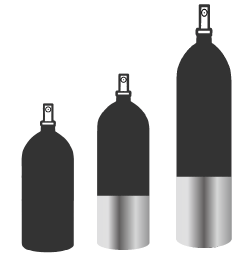
■High-Pressure Oxygen Cylinders
Oxygen is stored in dedicated, clearly marked cylinders designed specifically for oxygen service, in accordance with local regulations.
The oxygen inside should be medical-grade oxygen intended for emergency use.
Cylinder sizes vary.
Smaller cylinders can be depleted quickly, so choose a cylinder size appropriate for your planned operations, transport time, and local procedures.
|
 |
|
■Oxygen Regulator (Pressure Reducer)
To breathe oxygen from a cylinder, an oxygen regulator is required—similar in concept to diving regulators, but designed specifically for oxygen service.
Use only regulators rated and cleaned for oxygen. Do not substitute scuba regulators or non-oxygen-rated components.
Oxygen regulators typically include a pressure gauge to indicate remaining cylinder pressure and a control (dial/valve) to set the oxygen flow. Some models display a flow value directly; others use a separate flow meter.
For safety, oxygen equipment must never be lubricated with oil, silicone grease, or other non-approved lubricants, as these can increase fire risk.
|
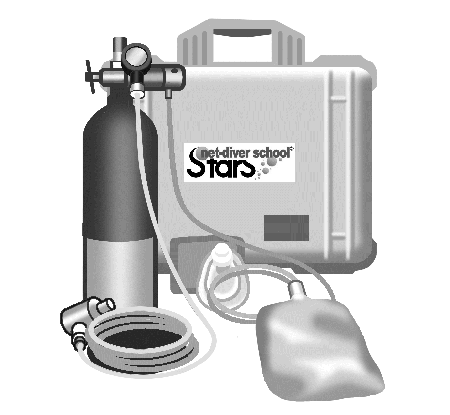
Oxygen Delivery System |
|
■Types of Oxygen Masks
An oxygen mask that covers the nose and mouth is commonly used to provide oxygen to a breathing patient.
Two common options are demand-valve systems and masks with a reservoir bag.
●Demand-Valve System
Similar to a diving regulator, oxygen is delivered only when the patient inhales.
Because oxygen is not flowing continuously when the patient is not inhaling, consumption is reduced.
When used correctly, this system can provide very high oxygen concentration.
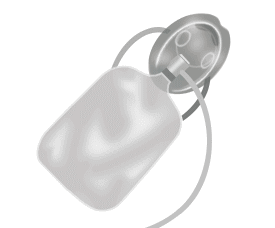
●Mask with Reservoir Bag (Non-Rebreather Type)
This system delivers oxygen as a continuous flow and uses a reservoir bag to increase the concentration of oxygen delivered.
Set the flow rate according to your training, local protocols, and the manufacturer’s instructions for the specific mask and regulator being used.
This type is often used because it is simple and requires minimal setup, but it can consume oxygen more quickly.
|
 |
|
|
  |
|
