|
Becoming Friends with Dolphins
Certification Card
Dolphin Swim Equipment
Equipment Preparation and Care
Equipment Setup
Rules and Etiquette
Surface Dolphin Swim
Underwater Dolphin Swim
Boat Dolphin Swim
Important Notes
Dolphin Facts
|

|
|
Once you are comfortable at the surface, you may begin learning basic underwater techniques.
Always descend calmly and within your comfort level.
|
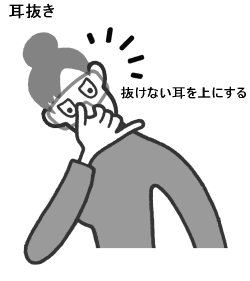
■ Equalization (Valsalva Maneuver)
As you descend, increasing pressure affects your ears.
If you feel pressure or discomfort, equalize immediately.
To perform the Valsalva maneuver, gently pinch your nose and exhale softly against closed nostrils.
You should feel pressure equalize in your ears.
Equalize early and often — before discomfort begins.
If equalization is unsuccessful, ascend slightly and try again.
If pain occurs, stop descending immediately.
Practice equalization on land while wearing your mask and snorkel.
|
|
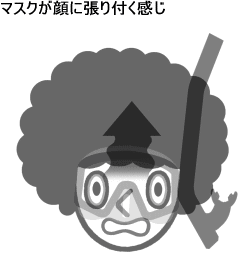
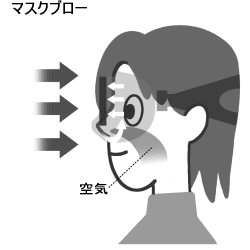
■ Mask Equalization
As you descend, pressure can cause the mask to press against your face.
To prevent discomfort, gently exhale a small amount of air through your nose into the mask.
|
|
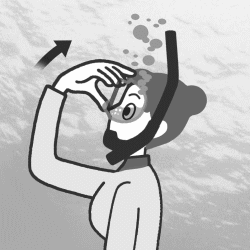
■ Mask Clearing
If water enters your mask underwater, remain calm.
Press the top of the mask frame while tilting your head slightly upward.
Exhale slowly through your nose to expel the water.
|
|
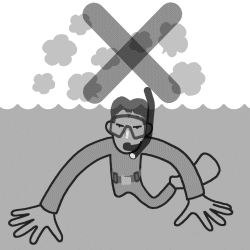
■ Dangerous Breathing Practices
Rapid, repeated deep breathing (hyperventilation) before breath-hold diving reduces carbon dioxide levels in the body.
While this may allow longer breath-hold times, it suppresses the natural urge to breathe.
This can lead to sudden loss of consciousness due to oxygen deprivation — a condition known as Shallow Water Blackout.
Loss of consciousness in water is extremely dangerous.
Never hyperventilate before diving.
Receiving air from a scuba diver while breath-hold diving is also strictly prohibited due to the risk of lung overexpansion injury.
|
|
■ Underwater Dolphin Interaction
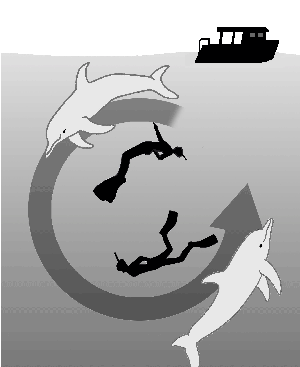
Relax and descend gently head-first while observing dolphin movement patterns.
Allow dolphins to approach naturally.
When dolphins swim nearby, rotate your body smoothly to follow their movement while maintaining awareness of your surroundings.
If comfortable, you may try slow underwater vertical rotations.
Maintain awareness of both the surface and bottom to stay properly oriented.
Remain within sight of your group.
When divers take turns descending, dolphins are more likely to remain engaged.
|
Underwater vertical rotation
|


|
