Play with fish
Certification card
Where the fish live 1
Where the fish live 2
School of fish
Symbiosis
Observation techniques and manners
Observation record
Emergency measures and first aid measures 1
Emergency measures and first aid measures 2
Emergency measures and first aid measures 3
Emergency measures and first aid measures 4
|

|
|
Fish are not evenly distributed throughout the ocean.
Most species are found only in specific areas, such as certain sandy zones or around underwater structures.
In addition, environmental changes and spawning behavior may cause fish to move to different locations.
|
|
■ Sand Areas
Just as it is difficult for people to live in the middle of a desert, it is challenging for many fish to live on open sand flats.
There are few places to hide from predators. |
|
|
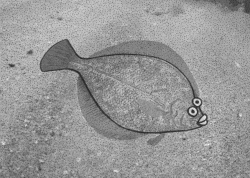
Many fish that inhabit sandy areas adapt by changing their body color to match the sand, or by partially burying themselves to avoid predators. |
 |
|
On flat sand, it can be difficult for fish to find food such as plankton.
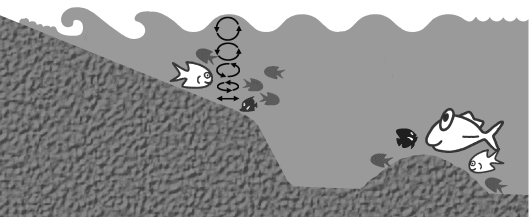
However, near slopes or sand ridges, tidal currents often concentrate food, making these areas more suitable habitats. |
|
|
|
|
|
■ Around Rocks, Coral Reefs, and Artificial Reefs |
|
|
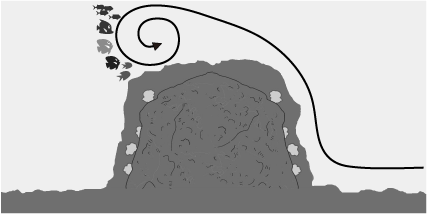
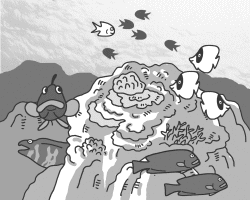
Underwater structures such as rocks, coral reefs, and artificial reefs create changes in tidal currents.
These current changes help concentrate food like plankton and provide many hiding places from predators, making them ideal habitats for fish.
Because many sandy-area fish also gather near these structures, they are often excellent dive sites.
Since currents constantly change, the exact location where food accumulates—and where fish gather—can also shift.
On the down-current side of an obstacle, eddies often form, allowing plankton and other food sources to collect. |
 |
|
|
|
|
  |
|