
Play with fish
Certification card
Where the fish live 1
Where the fish live 2
School of fish
Symbiosis
Observation techniques and manners
Observation record
Emergency measures and first aid measures 1
Emergency measures and first aid measures 2
Emergency measures and first aid measures 3
Emergency measures and first aid measures 4
|

|
■ Movement of Habitat
|
|
|
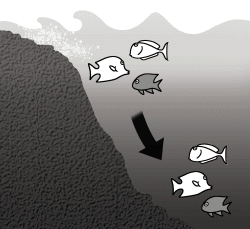
In areas with strong waves, divers may be unable to dive safely because the water movement can be powerful and unstable.
Fish are affected in the same way. When the sea becomes rough due to storms or typhoons, fish that normally live in shallow water often move to deeper areas where wave action is reduced. |
 |
|
|
|
Fish also move to areas where salinity remains more stable.
After heavy rain, large amounts of fresh water can flow into coastal areas and river mouths, changing salinity levels.
Fish living nearby may move offshore where salinity changes less. |
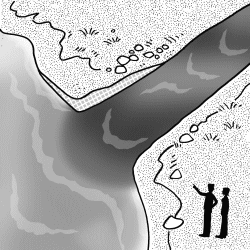
Fish evacuating offshore |
|
|
|
Fish seek areas with comfortable water temperatures.
In winter, cold air cools the surface water first, and the temperature gradually drops from the top down.
Deeper water is less affected by air temperature, so it stays more stable.
In winter, warm-water species may move deeper to avoid colder surface temperatures, while cold-tolerant species may move into shallower water. |
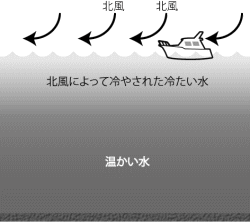
Do you prefer cold water or warm water? |
|
|
|
Fish may also move into shallow areas for spawning.
Newly hatched larvae need plenty of plankton for food and safe places to avoid predators.
Because plankton is often abundant in shallow water, spawning commonly occurs around reefs and other structures in these areas.
Spawning seasons vary by species, and during these times even large fish may be seen surprisingly close to shore.
|
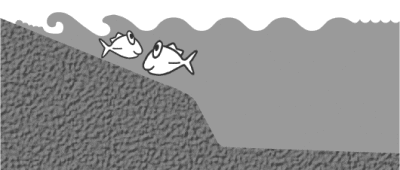
Spawning in shallow areas |
|
|
|
Many fish move into shallower areas in the early morning and late afternoon.
Migratory species, in particular, often move into shallow water around sunrise and sunset when feeding opportunities increase.
Most fish rest at night and become more active during daylight feeding periods.
In contrast, nocturnal animals such as shrimp and octopus rest among rocks during the day and become active at night.
|
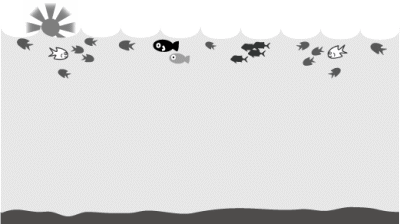
Migratory fish feed in shallow areas during morning and evening hours. |
|
|
  |
|
