■ Ascent Rate and Decompression Sickness
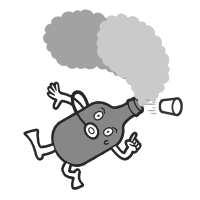
When you open a carbonated drink, carbon dioxide rapidly forms bubbles as the pressure is reduced.
This happens because the liquid is suddenly exposed to atmospheric pressure.
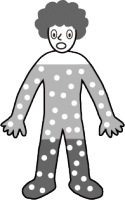
A similar physical principle applies to nitrogen dissolved in a diver’s body.
When ambient pressure decreases during ascent, dissolved nitrogen begins to come out of solution.
However, unlike carbonated beverages, nitrogen bubbles forming inside the human body can cause decompression sickness (DCS).
For this reason, ascent must be controlled and gradual.
Ascending too quickly increases the risk of excessive bubble formation.
Modern dive computers and the STARS dive table recommend a maximum ascent rate of 10 meters per minute.
This rate is considered a safe balance between efficient nitrogen elimination and minimizing the risk of decompression sickness.
|