
Night diving specialty
Certification card
Equipment 1
Equipment 2
Equipment 3
plan
Hand signal
Manners
Night diving procedure 1
Night diving procedure 2
Night diving procedure 3
Night diving procedure 4
Night diving procedure 5
Night diving procedure 6
|

|
■Moving Underwater
Before you begin, have the team gather on the bottom and do a quick safety check:
confirm remaining air pressure, OK status, and buddy position.
When you move, stay behind the diver in front of you and keep the same pace—do not overtake.
Follow the guideline/rope at all times. Do not leave the rope on your own.
Chemical lights are attached to the rope for navigation. Do not remove or reposition them.
Move carefully and avoid bumping or grabbing the chemical lights.
|
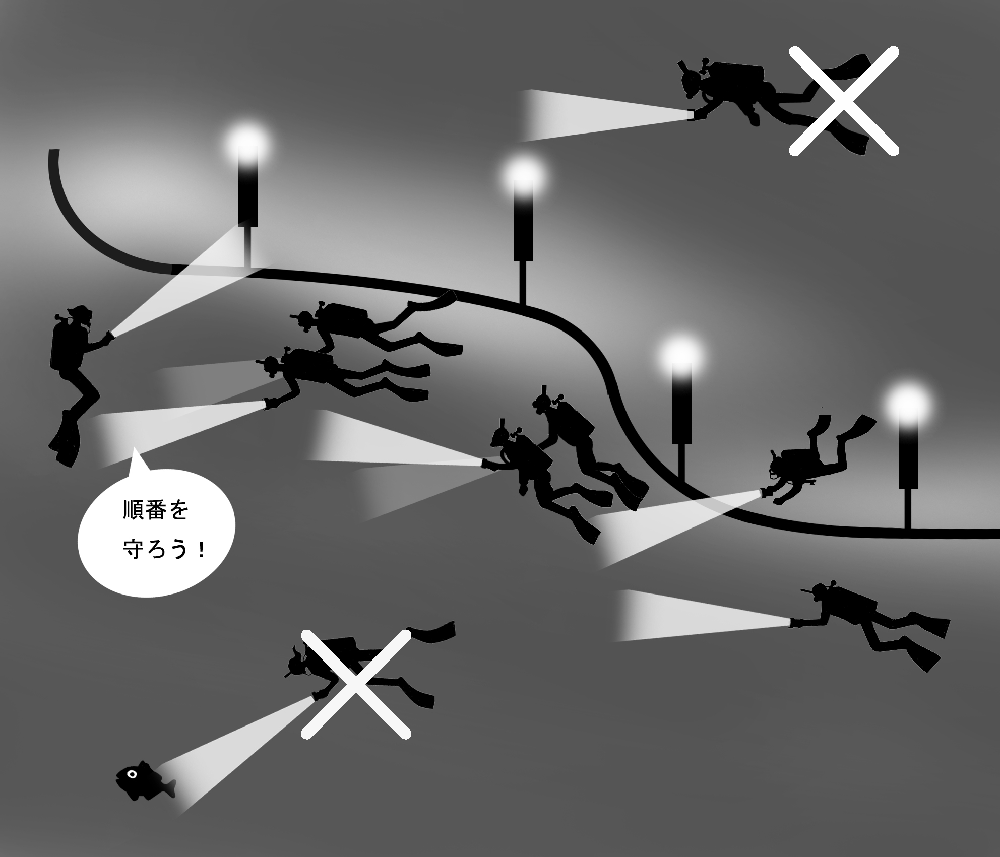
Move as a team along the rope |
|
In low visibility, particles in the water (such as plankton) can reflect your light and reduce what you can see.
This effect is called backscatter (halation).
If backscatter occurs, change your light angle: shine the light from above or from the side instead of straight ahead.
This helps you see the bottom and your buddy more clearly.
|
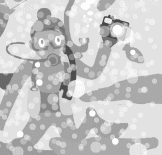
This is what backscatter (halation) looks like |
|
|
  |
|
