Easy diving with navigation
Certification card
Navigation type
Surface natural navigation
Surface compass navigation
Underwater natural navigation 1
Underwater natural navigation 2
Underwater compass navigation 1
Underwater compass navigation 2
Underwater compass navigation 3
Underwater compass navigation 4
Underwater compass navigation 5
|

|
|
|
1 |
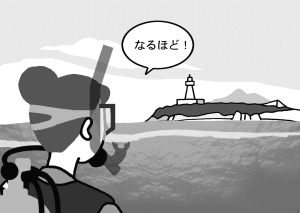
If you become disoriented underwater, ascend to the surface and confirm the direction to the exit point. |
|
 |
2 |
At the surface, hold the compass level. Point the lubber line toward the exit point, then rotate the bezel until the south end of the magnetic needle is aligned between the index marks. |
3 |
Before descending again, confirm that you have at least two-thirds of your starting air remaining (no more than one-third used). |
4 |
Keep the south end of the needle between the index marks and swim in the direction indicated by the lubber line. |
5 |
When one-third of your starting air remains, ascend and swim at the surface to the exit point. |
6 |
In areas with large rocks in a narrow channel, complex terrain, and rapidly changing depth, strong currents (including rip currents) may occur.
When swimming at the surface, watch the water ahead and avoid areas where the surface looks different from the surrounding water (for example, unusual chop, foam, or a darker “channel”). |
|
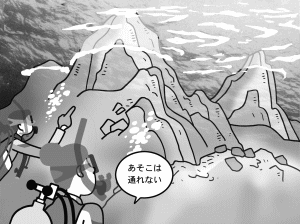
A rip current is a strong, narrow flow of water moving away from shore, formed where water funnels back out through breaks in shallow areas. |
|
|
|
|
|
|