|
Diving courses should be conducted in the following types of water environments and within the participant-to-instructor ratios specified below.
In addition, it is strongly recommended that all diving courses, including introductory diving experiences, be conducted in environments where entry and exit can be made from shore.
■Conditions for Introductory Diving (Introductory Diver Course)
These courses are conducted in confined water environments that meet the following conditions.
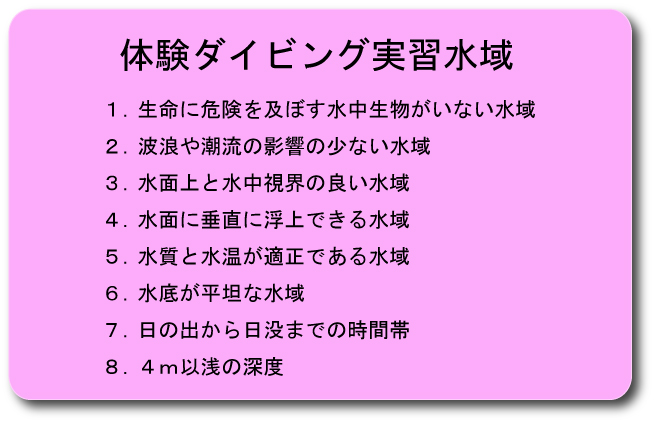
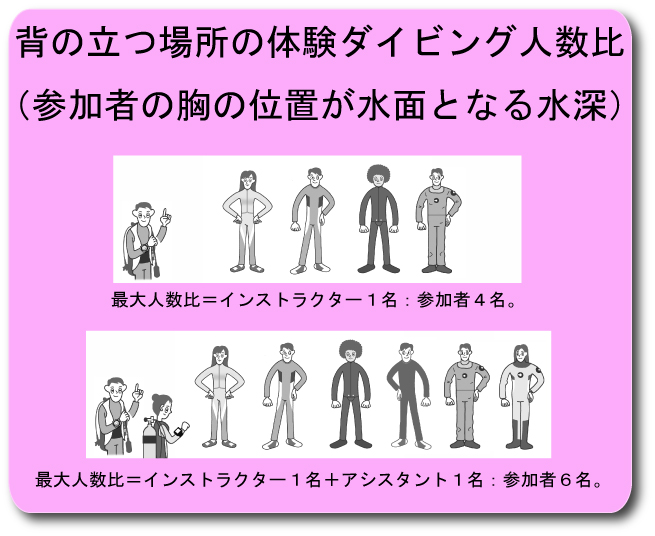
An assistant is a dive professional with active status (maintained membership and liability insurance). If two or more assistants are used, the number of participants can be increased by two for each additional assistant.
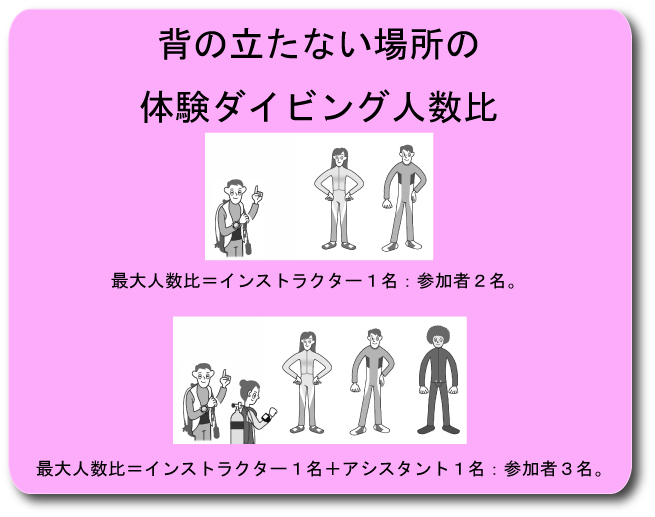
For introductory dives in water where participants cannot stand, the participant ratio must be reduced to enhance safety measures.
An assistant is a dive professional with active status (maintained membership and liability insurance). Even when two or more assistants are used, the number of participants cannot exceed four.
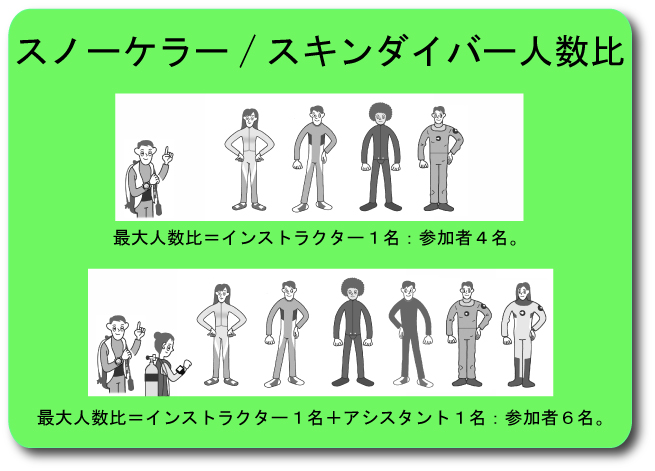
■Conditions for Snorkeler / Skin Diver Courses
These courses are conducted in confined water environments that meet the following conditions.
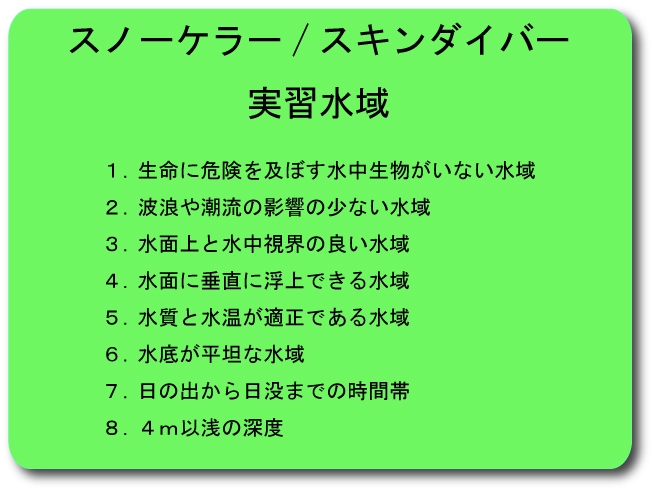
An assistant is a dive professional with active status (maintained membership and liability insurance). If two or more assistants are used, the number of participants can be increased by two for each additional assistant.
■Conditions for Entry Diver Course
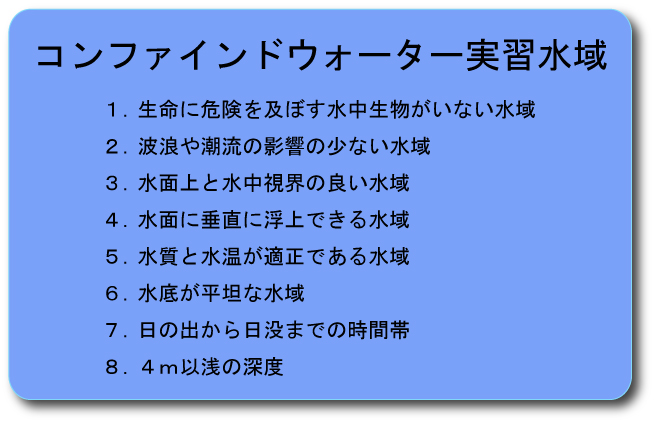
These courses are conducted in confined water environments that meet the following conditions.
The use of a swimming pool is strongly recommended whenever possible.
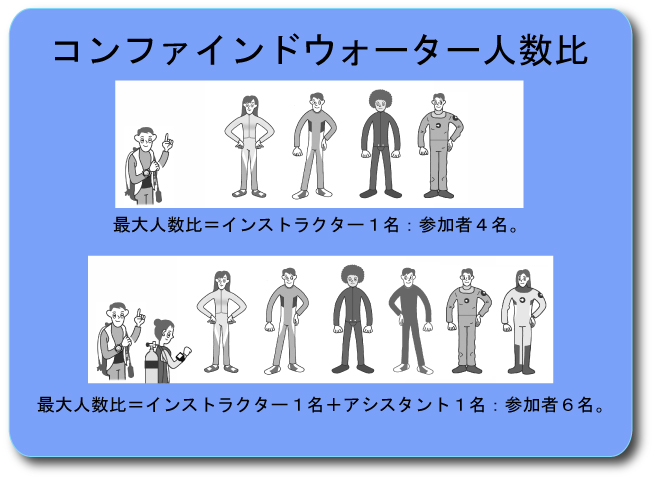
An assistant is a dive professional with active status (maintained membership and liability insurance). If two or more assistants are used, the number of participants can be increased by two for each additional assistant.
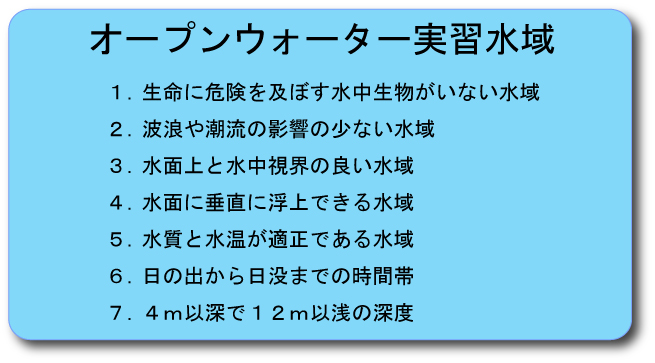
■Conditions for Open Water Training in the Tourist Diver Course
Instructors may provide open water training (ocean training) to those who have completed the Entry Diver Course, and may certify participants as Tourist Divers upon completion of two open water training sessions.
The maximum depth for the first dive is 8 meters.
The maximum depth for the second dive is 12 meters.
An assistant is a dive professional with active status (maintained membership and liability insurance). If two or more assistants are used, the number of participants can be increased by one for each additional assistant.
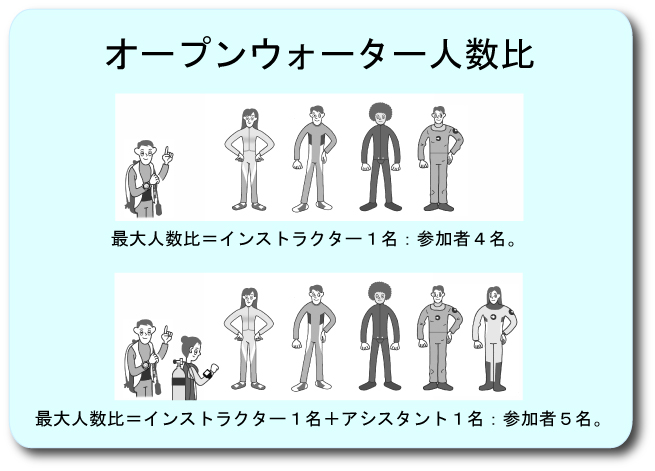
■Conditions for Open Water Training in the Open Water Diver Course
Instructors may provide open water training (ocean training) to those who have completed the Tourist Diver Course, and may certify participants as Open Water Divers upon completion of two open water training sessions.
The maximum depth for the first dive is 8 meters.
The maximum depth for the second dive is 20 meters.
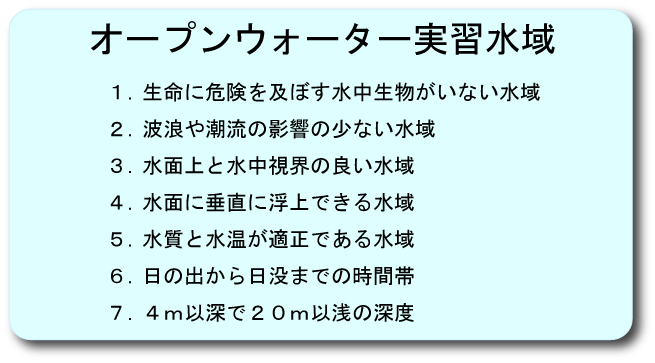
An assistant is a dive professional with active status (maintained membership and liability insurance) or a guide instructor. If two or more assistants are used, the number of participants can be increased by one for each additional assistant.
|




