
The Role of an Instructor
Certification Card
Course Conditions
Information Gathering
Dive Planning
Open for Registration
Class Control
Practical Training Methods①
Practical Training Methods②
Practical Training Methods③
Practical Training Methods④
Practical Training Methods⑤
Risk Management
Duties and Responsibilities
|

|
■Risk Management
If an accident occurs involving a student, the instructor may be held legally responsible.
During training, it is essential to thoroughly implement risk management and prevent accidents before they occur.
Instructors must anticipate various risks and avoid them in order to prevent diving accidents and problems.
Before the training, consider various risks and establish preventive measures.
① Observe the behavior of all students before diving, and speak to them gently to relieve anxiety so as not to cause stress.
Also, if there are signs of a stress response, cancel that student’s dive.
② During training, always keep all students within your field of vision and continuously check the condition of all students (safety check) (from a legal standpoint, at least once every four seconds).
Checking only specific students (for example, those who are slow to improve) is insufficient.
|
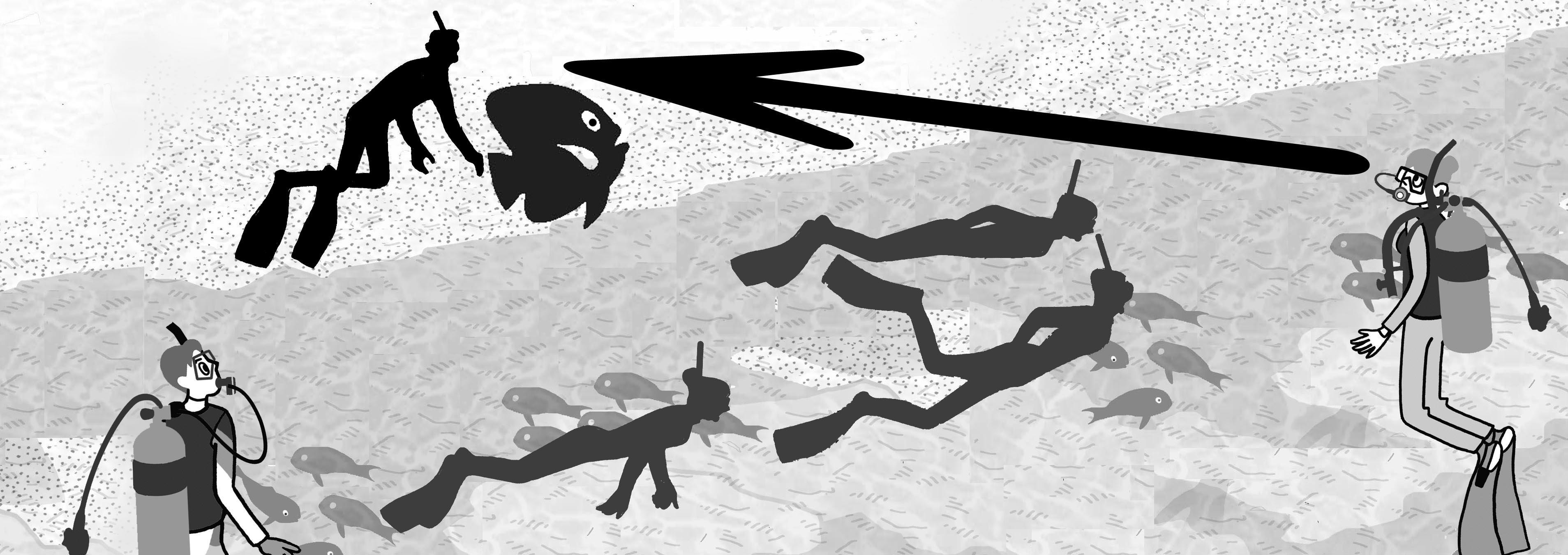
It is important to monitor all students’ movements (safety check).
|
|
③ When moving heavy equipment such as tanks and weights, carry them using one hand. If carried with both hands, in the event of a fall, there is a risk of dropping the equipment on your feet or trapping your hands between the equipment and the ground, leading to fractures or finger injuries. Especially for women with less arm strength, staff should carry tanks and weights whenever possible.
④ If students assist with staff tasks, be sure to brief safety measures in advance, even for minor tasks.
⑤ Underwater, check students’ remaining air pressure every few minutes. Also maintain sufficient eye contact to continuously monitor their mental state.
⑥ Equipment used by experienced divers may have a risk of failure due to aging. Do not assume safety just because they are experienced; instruct them to thoroughly check their equipment.
⑦ Middle-aged and older individuals (40+) have a higher risk of accidents due to increased heart rate. Confirm special measures for middle-aged guests and ensure slow diving practices.
⑧ Beginners may become distracted by marine life and fail to watch ahead or around them. Even during snorkeling, instruct them in briefings to watch their surroundings to avoid contact with reefs, etc.
⑨ In the event of a diving accident, there is a moral obligation to explain the situation to the injured person’s family. Even if you have a close relationship, always use an application form and keep written records confirming the participant’s physical condition and health status on the day. Verbal explanations alone without documentation may not satisfy the family and could lead to serious trouble.
⑩ In boat diving, check in advance that the boat ladder is stable, and instruct divers not to pinch their fingers or feet when exiting the boat.
⑪ In boat diving, the stern contains propulsion devices such as propellers. Use a current line, etc., and instruct divers to never approach the stern.
⑫ In boat diving, when diving with the boat anchored, prepare for possible anchor drag by ensuring a licensed staff member remains on board, or use long ropes, chains, or auxiliary anchors to secure the boat.
⑬ In boat diving, confirm during the briefing that students fully understand technical terms and procedures related to boat diving.
⑭ In boat diving, since footing is unstable and slippery on the boat, staff should handle loading and unloading heavy equipment such as tanks and weights whenever possible.
|
|
⑮ In boat diving, exhaust bubbles are difficult to see from the boat due to waves, and divers’ voices may be hard to hear due to engine and wave noise. Use surface marker buoys whenever possible to make divers’ positions easier to identify. |
|
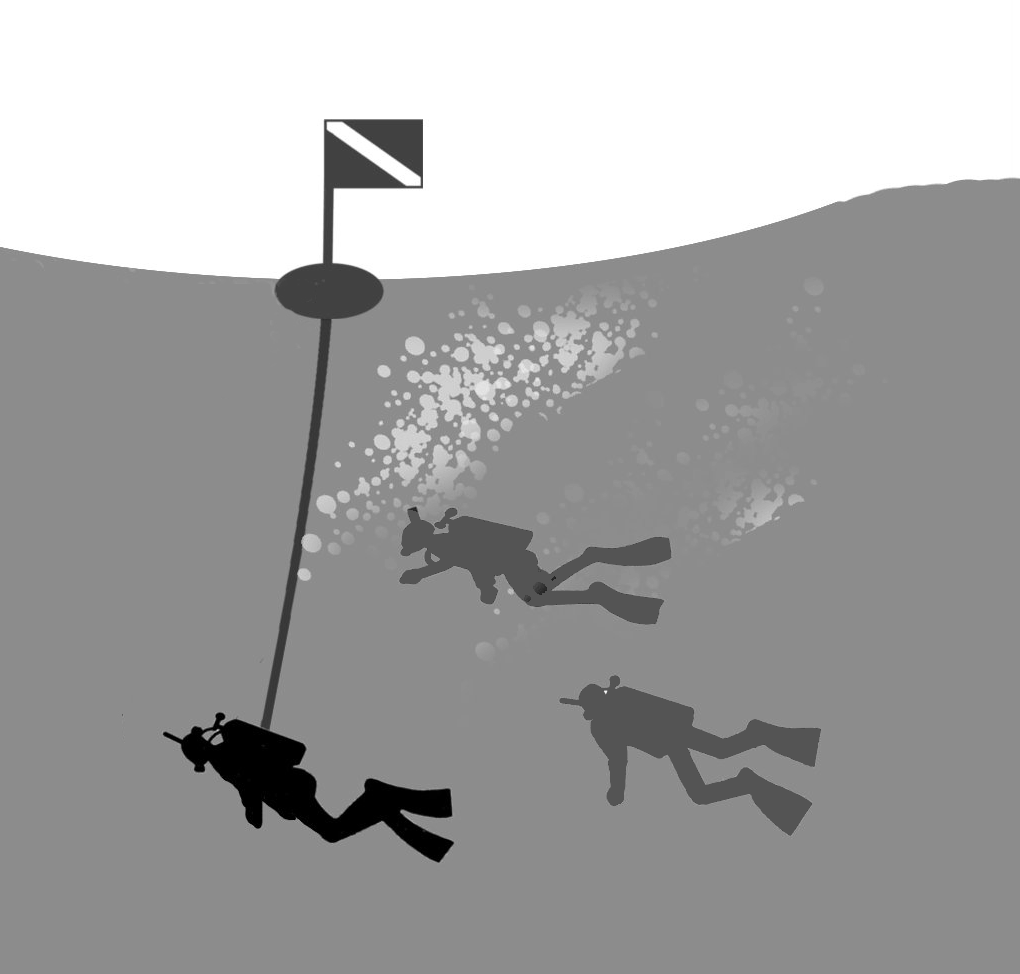
A surface marker buoy provides reassurance.
|
|
⑯ In boat diving, hold a meeting with the boat operator and lookout regarding entry methods, dive routes, exit procedures, and emergency responses such as drifting. |
|
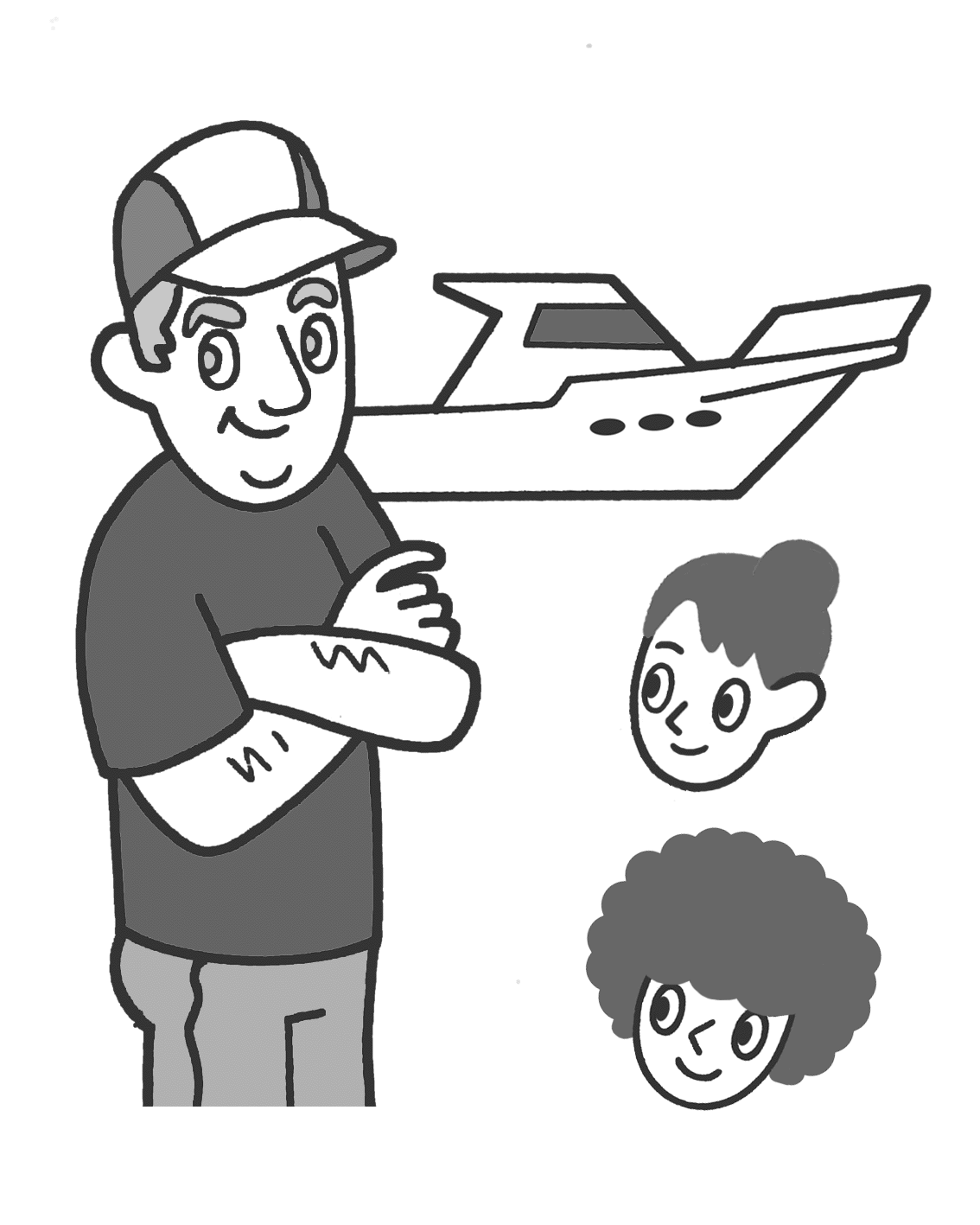
Communication with boat staff is essential.
|
|
⑰ In boat diving, to avoid contact between the boat and divers who have not yet started descending near the surface, the last assistant should begin descent last. The last assistant should signal the boat when starting descent. |
|
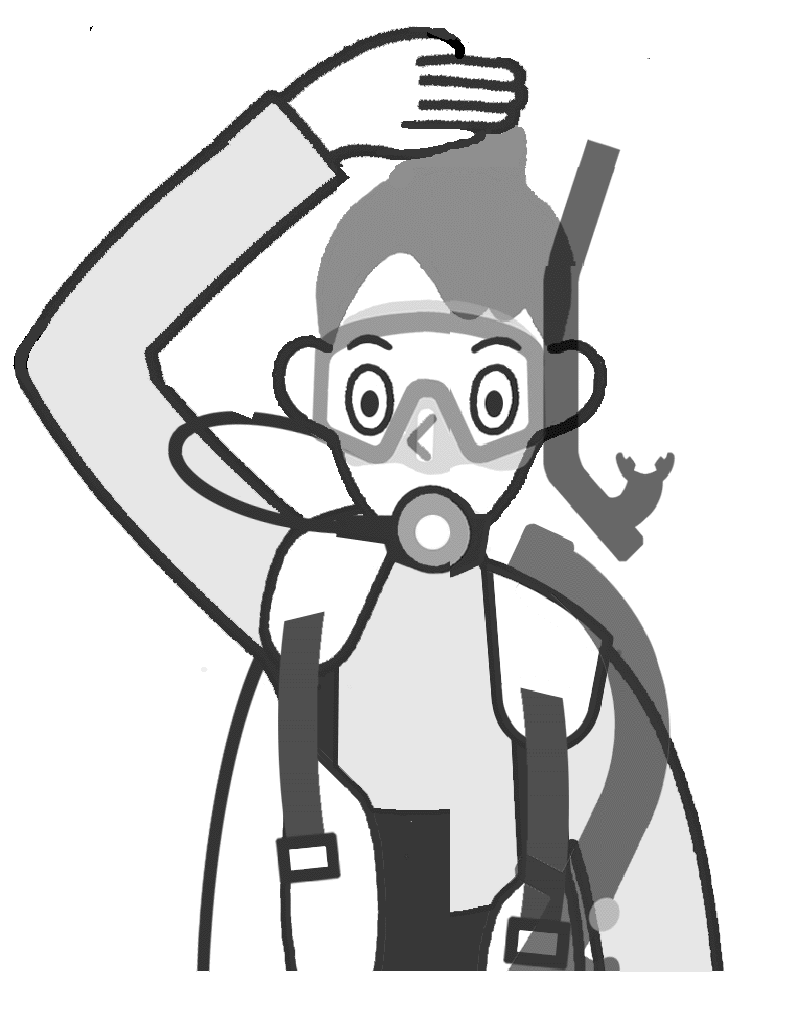
Descent (ascent) complete. Clearly signal the boat.
|
⑱ In boat diving, surface marker buoys and exhaust bubbles are monitored from the boat. The leader should signal the boat only after all members have completed their ascent, then allow the boat to approach. Do not allow the boat to approach while divers are still underwater. Also ensure that no students become separated from the group. |
|
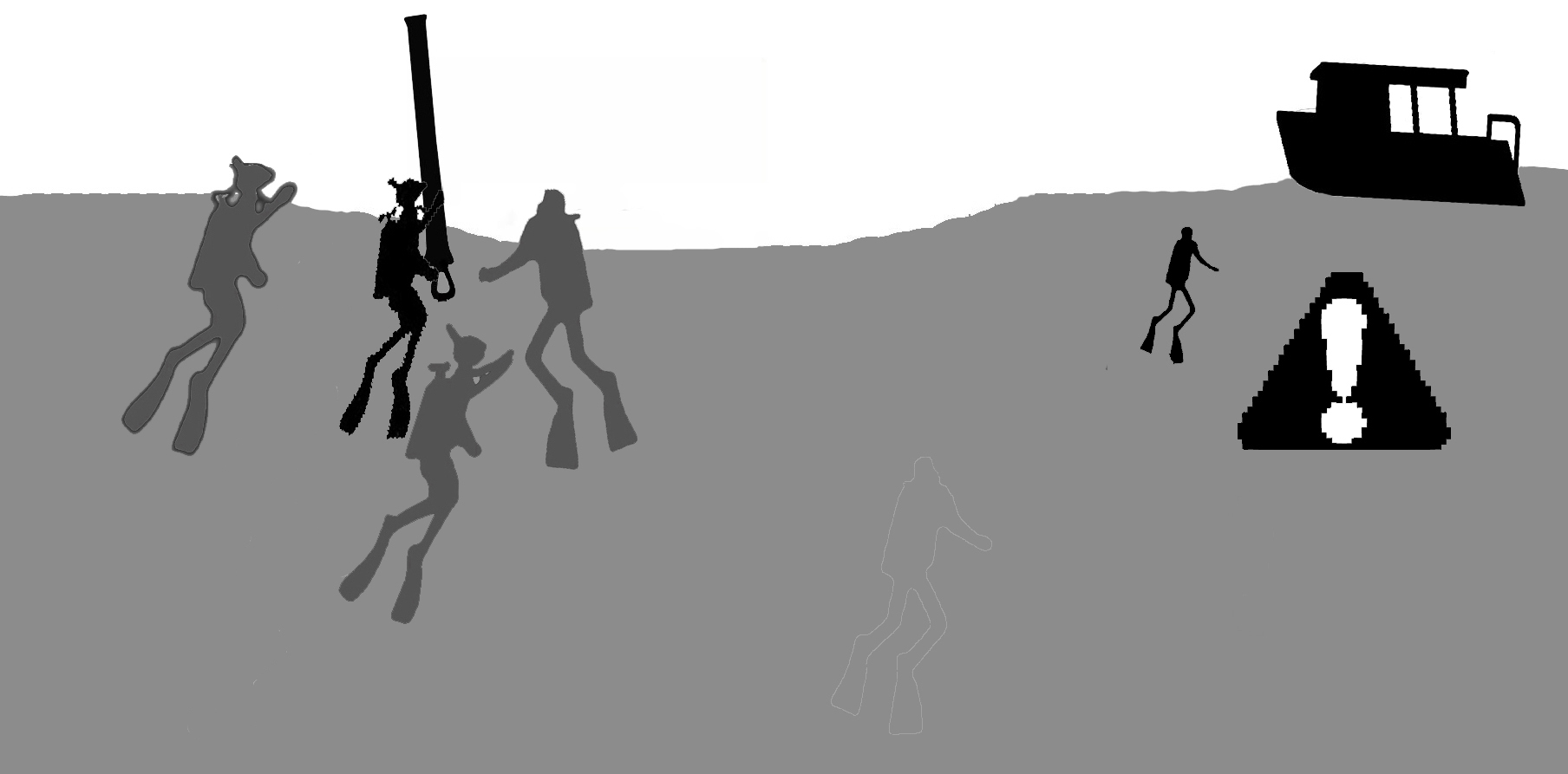
Is there anyone like this?
|
You can check the notice from the Japan Coast Guard here.
|
|
|
|
© net-diver school.2006.All rights reserved |
|


