
Holiday Complete Healing
Certification card
Self rescue equipment
Self rescue technique1
Self rescue technique2
Self rescue technique3
Self rescue technique4
Self rescue technique5
Self rescue technique6
Diver stress1
Diver stress2
Buddy stress response1
Buddy stress response2
Assist rescue equipment
Assist rescue technique1
Assist rescue technique2
Assist rescue technique3
Assist rescue technique4
Assist rescue technique5
|

|
|
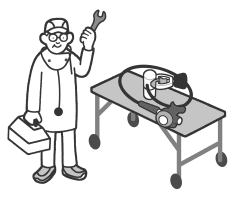
Protecting your own safety is known as self-rescue.
Self-rescue equipment helps you manage unexpected situations and prevent minor issues from escalating into serious problems.
Inspect and maintain your equipment regularly to ensure it is ready for immediate use whenever needed.
|
 |
|
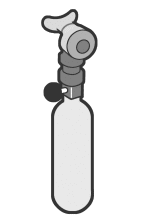
■ Pony Bottle
A small, independent cylinder equipped with its own regulator.
Although compact in size, it provides an emergency air supply for a limited period underwater.
|
|
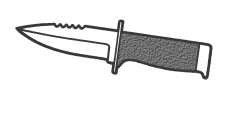
■ Knife
Used to cut fishing lines, nets, or ropes if you become entangled underwater.
|
|
|
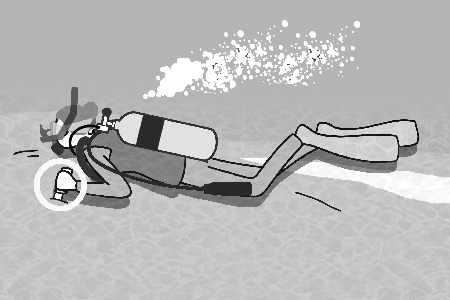
A knife may also be used carefully as a stabilizing aid when managing position in sandy bottom conditions with current.
|
|
■ Tank Banger
Used to create an audible signal underwater to gain your buddy’s attention, such as in the case of cramps or other minor difficulties.
|

|
■ Surface Signaling Devices
These devices help you become more visible if you surface away from the boat or are drifting.
Common examples include inflatable surface marker buoys (SMBs) and whistles for producing loud sound signals.
|
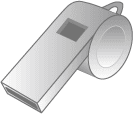
Whistle
|
|
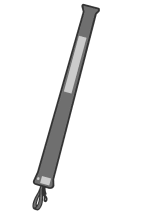
Surface Marker Buoy
|
|
Additional signaling devices include sea dye markers to increase surface visibility, signal flares, signal mirrors that reflect sunlight, battery-powered strobe lights for night use, and surface marker buoys equipped with radar reflectors for improved detection by vessels.
Sea dye markers and flares should always be stored in appropriate waterproof containers.
|
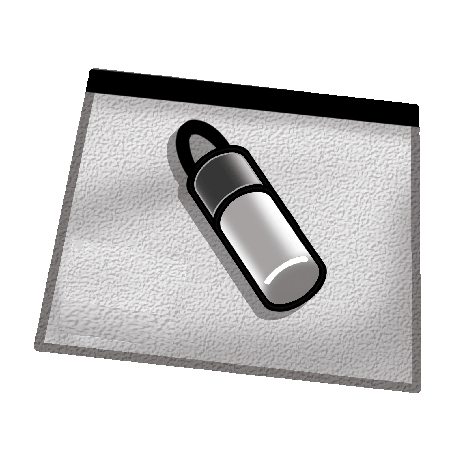
Sea Dye Marker
|
|
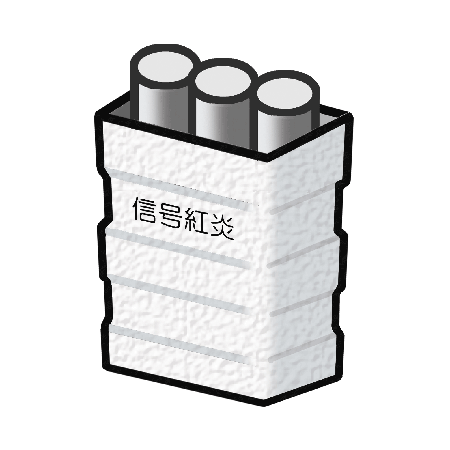
Signal Flare
|
|
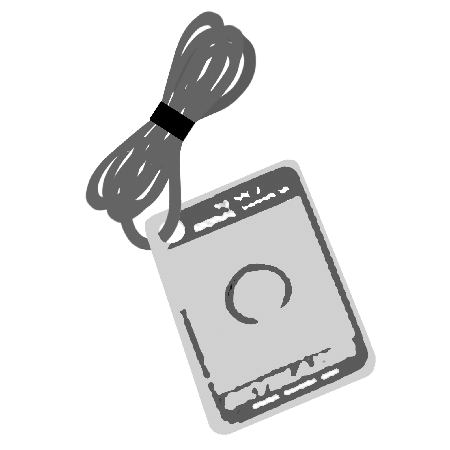
Signal Mirror
|
|
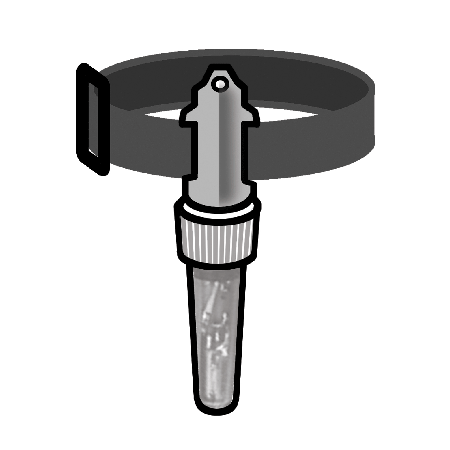
Strobe Light
|
|
|


|
|
