Holiday Complete Healing
Certification card
Self rescue equipment
Self rescue technique1
Self rescue technique2
Self rescue technique3
Self rescue technique4
Self rescue technique5
Self rescue technique6
Diver stress1
Diver stress2
Buddy stress response1
Buddy stress response2
Assist rescue equipment
Assist rescue technique1
Assist rescue technique2
Assist rescue technique3
Assist rescue technique4
Assist rescue technique5
|

|
■ Underwater Rescue
Underwater, never rush in to help a diver in difficulty.
Whether the diver appears calm or panicked, an uncontrolled approach can put you at risk of being grabbed or held.
First, stop at a safe distance and observe the diver’s breathing and body language.
If the diver is breathing rapidly (visible as fast, continuous exhaust bubbles), use clear, exaggerated hand signals to slow the breathing and regain control.
|
|
|
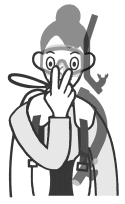
Please look at me.
|
|
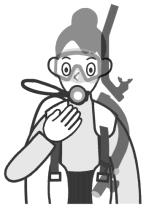
Breathe in
|
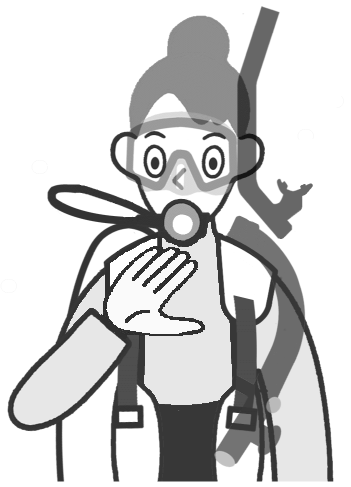
Breathe out
|
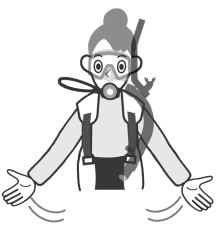
Breathe in
|
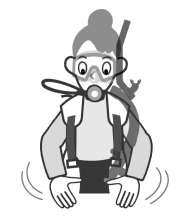
Breathe out
|
|
|
Use large, simple hand signals that are easy to understand.
Once the diver calms down, signal to ascend and begin a slow, controlled ascent together.
Even if the diver does not immediately respond to the ascent signal, the diver may follow once you begin to ascend.
|
|
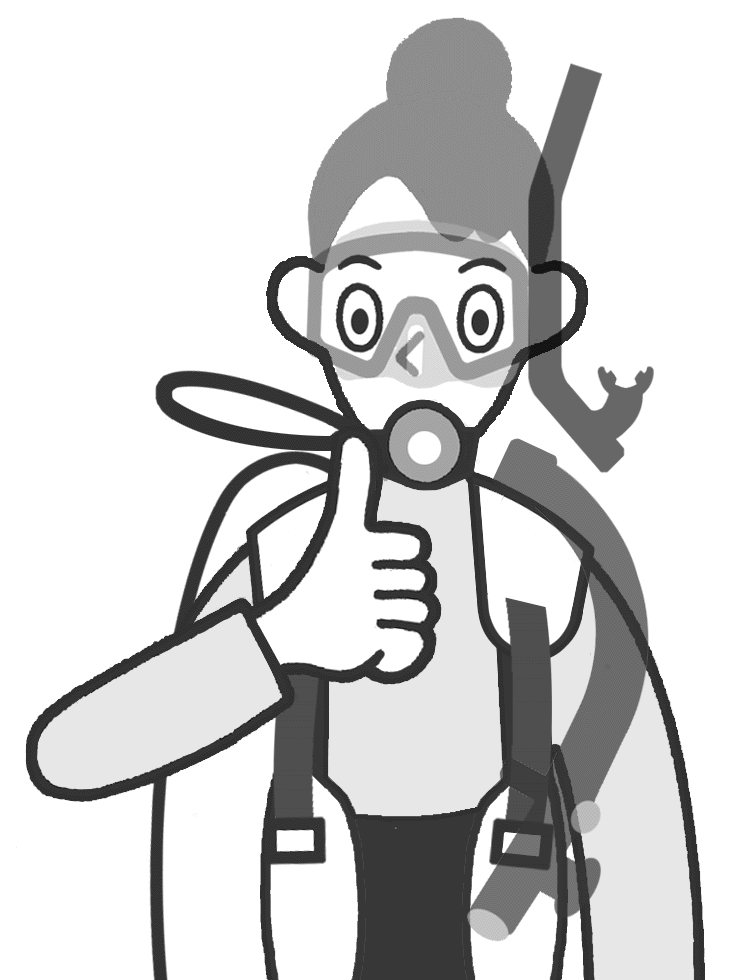
Ascend
|
|
A panicked diver may feel short of breath and attempt a rapid ascent toward the surface.
If the diver is ascending too quickly without exhaling, position yourself below and control the ascent by holding the fins and slowing the ascent rate to help prevent lung overexpansion injuries.
At the surface, support the diver and continue the rescue using swimming rescue techniques.
|
|
|
|
|
|