
Holiday Complete Healing
Certification card
Self rescue equipment
Self rescue technique1
Self rescue technique2
Self rescue technique3
Self rescue technique4
Self rescue technique5
Self rescue technique6
Diver stress1
Diver stress2
Buddy stress response1
Buddy stress response2
Assist rescue equipment
Assist rescue technique1
Assist rescue technique2
Assist rescue technique3
Assist rescue technique4
Assist rescue technique5
|

|
|
Stress is mental or physical strain that can reduce awareness and decision-making.
If stress increases, it may lead to poor judgement or uncontrolled reactions underwater.
Recognize common stress triggers early and take action to reduce stress for yourself and your buddy.
|
|
■ Time Stress
Time pressure may occur when preparing in a hurry or worrying about schedules and dive time limits.
Plan ahead, allow adequate time, and conduct dives at a controlled, unhurried pace.
|
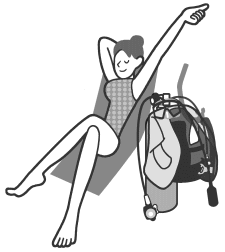
Dive at a relaxed pace |
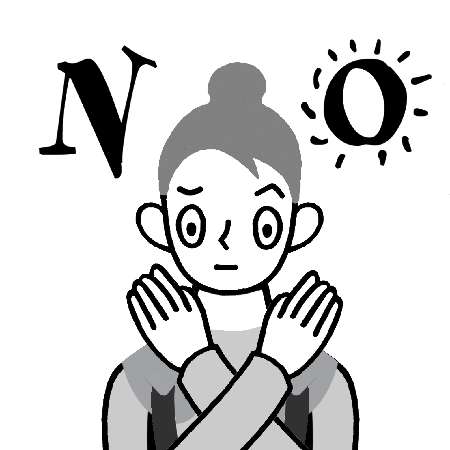
■ Task-Loading Stress
Task-loading stress may occur when trying to achieve a goal, such as keeping up with the group, navigating back to a guide, or attempting to take a specific photograph.
If the plan exceeds your comfort level or training, communicate clearly and choose a safer option.
|
 |
■ Fatigue and Cold Stress
Fatigue and cold stress may occur when swimming for extended periods, swimming against current, or diving in cold water.
Select dive sites appropriate for your fitness level and use exposure protection suited to the water temperature.
|
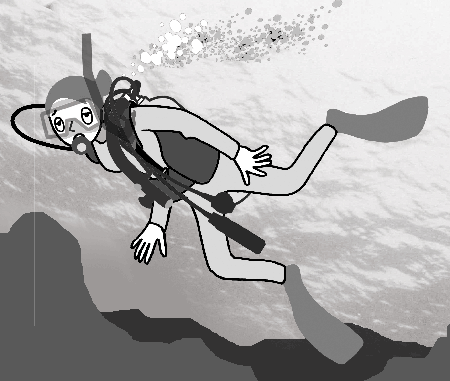
Fatigue |
■ Disorientation Stress
Disorientation may occur in low visibility, at night, or in overhead environments such as caves and wrecks. This can increase anxiety and reduce decision-making.
Do not enter caves or wrecks without appropriate training, equipment, and experience.
Plan night dives in locations where you are already familiar with the site during daylight.
|
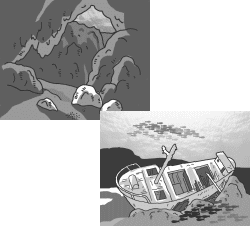
Caves and wrecks require special training |
|
|
  |
|
